
Translated Poetry Books
Poetry in Translation: Essential Books, Presses, Essays, and Global Voices in English
Translated poetry books are not peripheral to literature. They are part of its structural integrity. Every language carries its own music, memory, and pressure. When poems cross into English, they do not arrive intact—they arrive transformed. That transformation is not loss alone; it is also renewal.
For readers, scholars, translators, and publishers, translated poetry books provide:
- Access to contemporary global voices
- Historical continuity across linguistic traditions
- Insight into translation as a creative, ethical, and political act
- A corrective to Anglophone literary insularity
This pillar page functions as a comprehensive guide to poetry books in translation: the foundational theory behind them, the presses and awards that sustain them, and the poets shaping the contemporary field.
How to Choose Your Next Translated Poetry Book
Choosing a translated poetry book does not require mastery or prior expertise. In fact choice, when it comes to poetry, requires very little at all.
Start With Curiosity
You do not need to understand an entire tradition before reading. Attraction—to a voice, a title, a translator, or a press—is often the best guide.
Read Translator’s Notes and Introductions
When available, translator’s notes and introductions provide crucial context. They explain constraints, priorities, and interpretive decisions, and can deepen engagement even when the original language is unfamiliar.
Read Across, Not Exhaustively
Translated poetry rewards lateral reading. One book opens a door; following the translator, press, or country often leads to unexpected connections.
For more detailed guidance, see How to Read Poetry in Translation.
Suggested Reading Adventures
For readers who enjoy structure, the following reading approaches can help sustain exploration.
One Country, Three Books
Choose one country and read multiple poets across different periods or translators.
One Translator, Many Voices
Follow a single translator across several authors to observe stylistic continuity and variation.
One Press, One Season
Read a translation-focused press’s catalog as a curated body of work rather than isolated titles.
One Anthology, Then One Deep Dive
Use an anthology as orientation, then pursue individual poets or translators that resonate.
*Cody note: the individual book listing text for anthologies looks a little wonky because the book descriptions are based off a preset format of input criteria for when I import them. Apologies!
Foundational Essays on Literary Translation and the Translation of Poetry
Before one can fully understand translated poetry books, one must understand the intellectual and philosophical debates that surround them. Several essays form the backbone of translation studies and continue to influence how poetry is translated and received.
Walter Benjamin — “The Task of the Translator”
Benjamin’s essay remains one of the most cited works in translation theory. He proposes that translation reveals the “afterlife” of a text—its continued unfolding in new linguistic contexts. For poetry, this suggests that translation is not duplication but continuation.
Benjamin’s ideas are foundational in comparative literature departments and frequently referenced in contemporary translator prefaces.
Lawrence Venuti — The Translator’s Invisibility
Venuti’s argument is direct: Anglo-American publishing culture often demands fluency that erases the translator’s presence. He calls for “foreignizing” strategies that retain the texture of the source language rather than domesticating it into seamless English.
For poetry, this question becomes especially acute. Should the translation preserve strangeness? Or prioritize readability? The answer often defines a translator’s style.
Roman Jakobson — “On Linguistic Aspects of Translation”
Jakobson distinguished between intralingual, interlingual, and intersemiotic translation. His framework is especially useful for understanding poetry, where metaphor, sound, and ambiguity resist simple equivalence.
Octavio Paz — “Translation: Literature and Letters”
The Mexican poet and essayist Octavio Paz described translation as a form of creation. For Paz, every text is already a translation of experience into language; translating that text into another language continues the same process.

Paz’s dual role as poet and translator makes his perspective particularly relevant to poetry in translation.
Contemporary Translation Scholarship
Journals such as Asymptote, Words Without Borders, and Modern Poetry in Translation regularly publish translator interviews and essays that extend these debates into contemporary practice.
For professionals and scholars, these publications provide current discourse around:
- Ethics of translating conflict-zone literature
- Indigenous-language translation
- Gender and translation
- Collaborative translation models
Understanding these essays deepens the reading of any translated poetry book.
What Is a Translated Poetry Book?
A translated poetry book is a published collection of poems originally written in one language and rendered into another by a translator (or team of translators).
Unlike prose translation (hah, take this novelists! your tactless arts! (If, dear reader, you stumble across this line and wonder “Wow, this Cody is such an ass,” I would offer the reminder that I do not actually bare any ill feelings toward the art of fiction)), poetry translation requires sustained attention to:
- Sound and rhythm
- Lineation and white space
- Cultural references and intertextuality
- Wordplay and ambiguity
- Historical and political context
The translator is not a mechanical intermediary. In poetry especially, they are a co-creator.
Beyond the Individual Poem
Poetry books matter because poems do not exist alone. Sequence, pacing, repetition, and accumulation all play a role in how meaning unfolds. In translation, this becomes even more pronounced. The translator’s decisions reverberate across the entire book, shaping a coherent voice that readers come to recognize and trust.
A book-length translation allows readers to stay with difficulty, strangeness, or unfamiliar music long enough for it to become legible on its own terms.
The Role of the Translator in the Book
In translated poetry books, the translator is not invisible. Translators shape diction, lineation, rhythm, and register repeatedly, across dozens or hundreds of pages. Over time, these decisions form a recognizable style.
Many readers discover that following a translator can be as meaningful as following a poet. Translator names on covers and title pages signal not only linguistic competence, but aesthetic commitment. Translator’s notes and introductions often articulate the stakes, constraints, and ethics guiding the work, and should be read as part of the literary object.
Why Translated Poetry Books Matter
They Preserve Cultural Memory
Consider the work of Paul Celan, whose post–World War II German poetry confronts language itself as fractured material.

Celan’s poems—translated into English by figures such as Pierre Joris and Michael Hamburger—do not simply “communicate” meaning. They wrestle with the viability of language after catastrophe. Translation becomes the medium through which that reckoning travels into English-speaking contexts.
They Expand the Contemporary Canon
Modern poetry in translation is vibrantly contemporary, not archival alone.
For example:
- Garous Abdolmalekian — Iranian poetry of exile and interior stillness
- Natalia Toledo — Zapotec and Spanish lyric rooted in Indigenous language and ecology
- Iryna Starovoyt — Ukrainian poetry navigating war, identity, and displacement


These books reshape what the English-language canon looks like. They are increasingly taught in comparative literature and global humanities program
They Reframe How We Read English Itself
Reading poetry in translation alters English from within.
Syntax stretches. Metaphors resist assimilation. Pacing shifts.
Translation theorist Benjamin argued that translation exposes the hidden possibilities of language. Poetry in translation demonstrates this most vividly. To read translated poetry is to read English under pressure.
Major Presses Publishing Translated Poetry Books
The vitality of translated poetry depends heavily on independent presses willing to invest in global literature.
Notable publishers include:
- Deep Vellum
- Ugly Duckling Presse
- Archipelago Books
- Charco Press
- World Poetry Books
- Eulalia Books
- Lost Horse Press
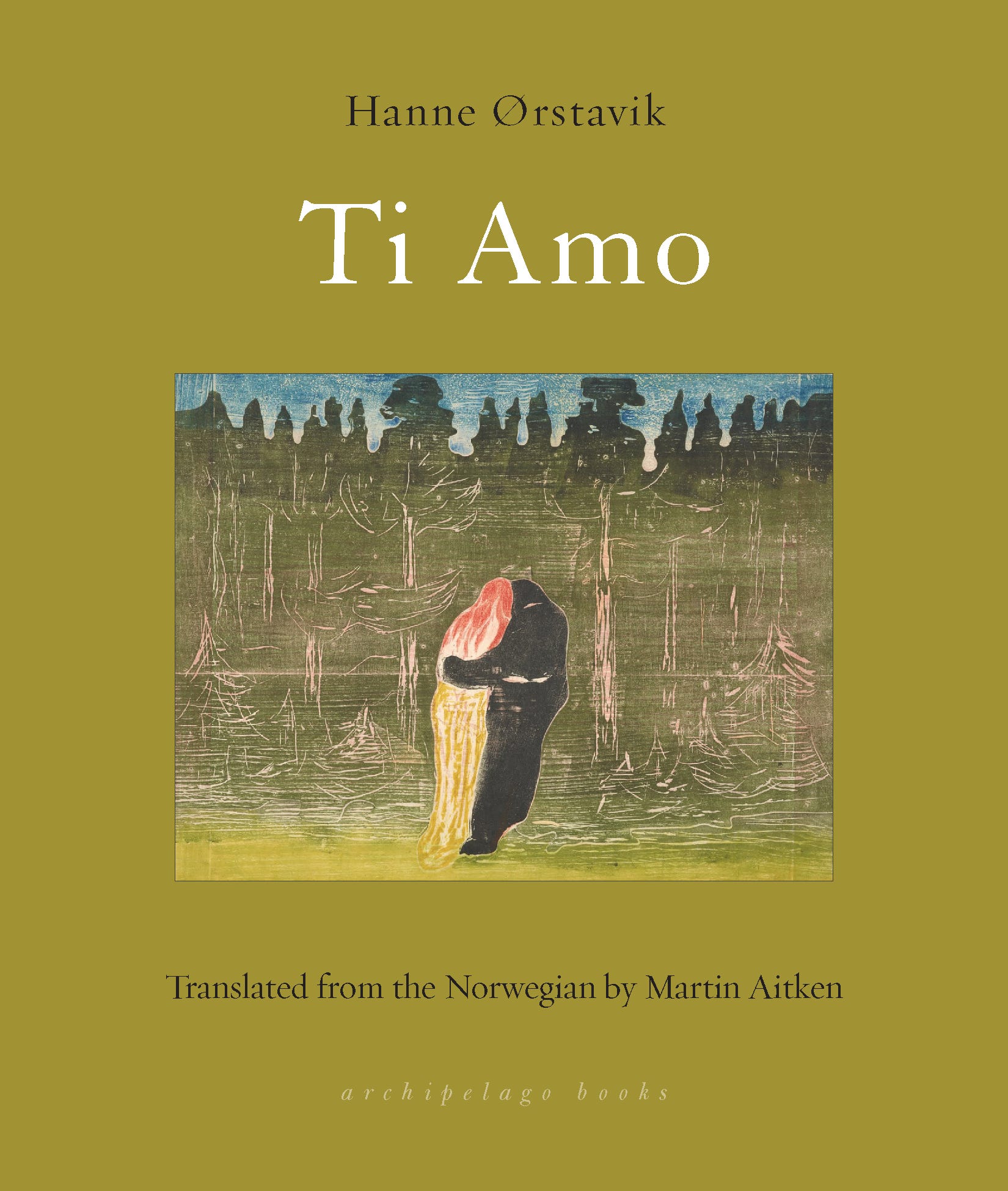
These presses often include:
- Translator’s notes
- Facing-page bilingual editions
- Scholarly introductions
- Historical essays contextualizing political background
Their catalogs frequently function as informal curricula for translation studies.
Awards for Translated Poetry Books
Awards play a critical role in visibility, academic adoption, and preservation.
Key recognitions include:
- Sarah Maguire Prize for Poetry in Translation
- American Literary Translators Association National Translation Award
- Prize of the City of Münster for International Poetry
Shortlists often become reference points for scholars and librarians curating global collections.
How to Evaluate a Translated Poetry Book
I don’t believe we live in a time where we can take critical thought or reception of a work for granted. That said, I think evaluation as a concept for literature is mostly used as a means to rank the commodified value of a work. If you, as a casual reader, feel drawn to evaluate a work on whether it’s good or bad I might bite back and suggest you instead think about the language, the choices, the formatting, and the themes present.
That said, for those looking to start in on writing critical receptions of translated poetry, I might offer these four frameworks:
Translator Reputation
Review the translator’s previous publications, essays, and interviews.
Paratextual Framing
Does the edition include translator’s notes, contextual essays, or original-language excerpts?
Press Curation
Some presses specialize regionally or linguistically. Identifying those patterns strengthens research depth.
Scholarly Reception
Look for academic reviews, course adoption, and citation frequency.
Frequently Asked Questions About Translated Poetry Books
Are translated poetry books accurate?
Accuracy in poetry translation is not literal equivalence but fidelity to tone, structure, and conceptual resonance.
Is contemporary translated poetry widely available?
It really depends on your definition of widely available. Most library systems will have a means of you checking out the book, and some independent bookstores will have a means of ordering the poetry; however, I must admit it will probably be quite rare for you to find much selection on a casual shelf.
Why are translated poetry books important now?
In periods of geopolitical conflict and global migration, literature across languages provides historical context, cultural nuance, and ethical engagement.
A Living, Expanding Field
Translated poetry books are not static monuments. They evolve as new translations reshape earlier generations and as emerging translators bring new linguistic strategies into English.
To read poetry in translation is to recognize that English is not the center of literary gravity. It is one language among many.
The books are not substitutes for the original texts. They are carefully built bridges, intellectually rigorous, and alive with the tension of two languages in conversation.